An Introduction to Zero-Based Transformation™
For transformation executives, initiative owners and practitioners: why so much transformation activity leaves the operating model unchanged, and the methodology that defines, reads, works and proves the change.

Why activity is not change
Most enterprises run more transformation than ever: strategy programs, platform replacements, AI investments, a transformation office and a portfolio of initiatives across every function. Yet a transformation can be fully active, with every workstream reporting on track, and still leave the way the business operates unchanged.
It happens for a simple reason. Strategy is set at the top. Delivery starts at the bottom. The layer in between, a clear statement of what the operating model must make true for the strategy to hold, is rarely written down. Each team fills that gap with its own interpretation, and the work that follows is busy but does not add up.
That gap now carries a cost. Boards, investors and CFOs are asking leaders to show how a strategy and its investment portfolio will become value before the next funding decision, and the same question is being asked of technology, digital and AI spend.
What an operating model is
Ask most people how their company works and they describe the structure: divisions, functions, reporting lines. The structure matters, but work does not move through the org chart. It moves through flows that cross it. An order travels from sales to operations to finance. A hiring request travels from a manager to HR to IT.
An operating model is a collection of integrated end-to-end value streams and lifecycles/workflows engineered and orchestrated to produce scalable value.
Those flows are what customers, employees and regulators actually experience. The governing conditions behind them, including decision rights, capacity, economics, systems, data, controls and evidence, are also part of what a transformation must examine and, where necessary, change. That is the layer ZBTOS teaches you to work on.
What makes it zero-based
Zero-based means starting each transformation from what the operating model must make true, rather than from the current list of initiatives, the existing org chart or last year’s plan. Every piece of work then has to justify itself against that definition.
It is not zero-based budgeting. Zero-based budgeting rebuilds the budget from zero. Zero-Based Transformation™ rebuilds the definition of the change from zero, and asks what the operation must become before deciding what to fund.
The Governing Criteria
Before major delivery commitments are made, the enterprise needs an explicit mandate, required operating conditions, an integrated and enabled approach, and an agreed basis for proof. As execution proceeds, those conditions are tested against operating evidence. Results are claimed only to the extent the evidence supports them. Each criterion is a question an executive can ask and a practitioner must answer with evidence.
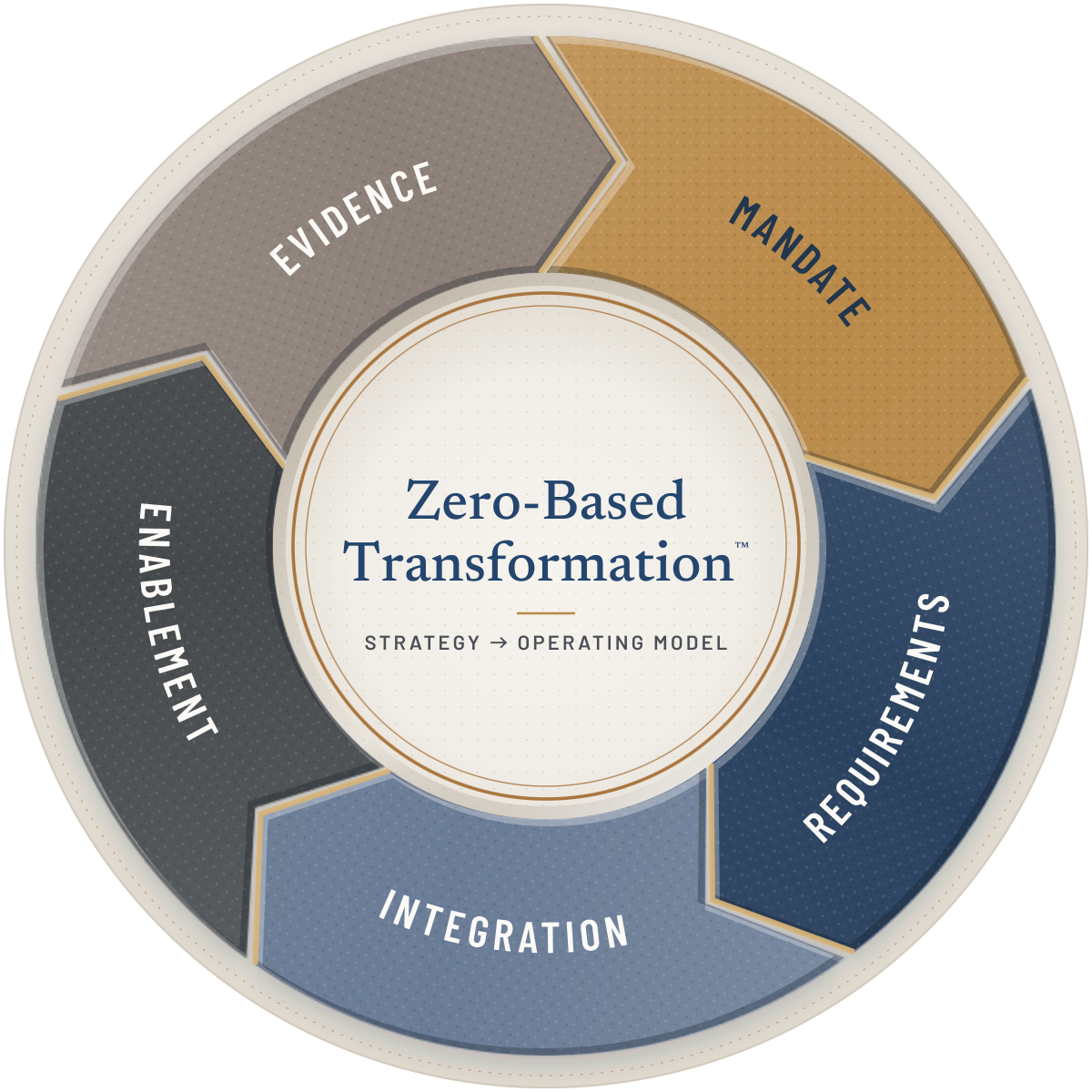
Each criterion is evaluated as Stated, Contested or Missing. Nothing is scored. They are criteria to be satisfied, not phases to complete in order.
GSDPI™: reading how the work runs
To change an operating model you first have to see it. GSDPI™ reads value-producing business work, such as order-to-cash, hire-to-retire or IT demand through delivery, through five standing functions that are present in every flow whether or not anyone is managing them.
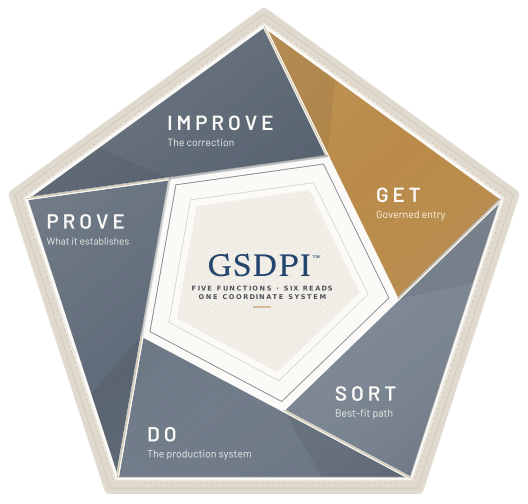
Five standing functions. Six ways to read them: Vertical, Horizontal, Seams, Node, Swimlane and Macro. One coordinate system. Each flow keeps its own stage names, so finance, HR, IT and operations can be compared on the same five functions.
BRACE™ for Transformation: working the change
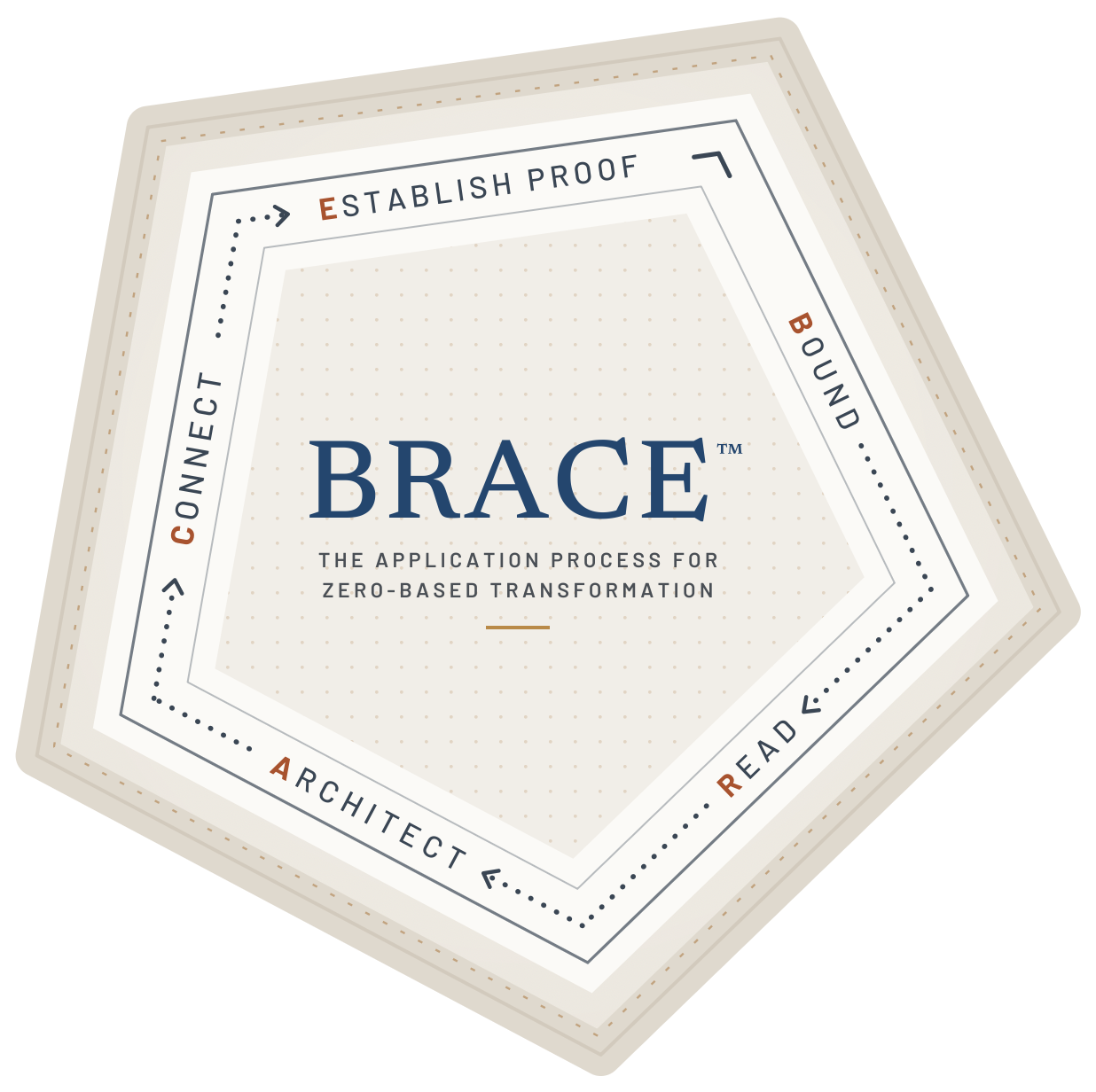
BRACE™ for Transformation is the application process: five actions that carry one transformation from its boundary to proof that it happened.
ZBTOS™: one operating system
ZBTOS™ is the integrated operating system that brings the criteria, the model, the process, the instruments and the governance together, so a transformation is read, worked and proven on one system instead of many.
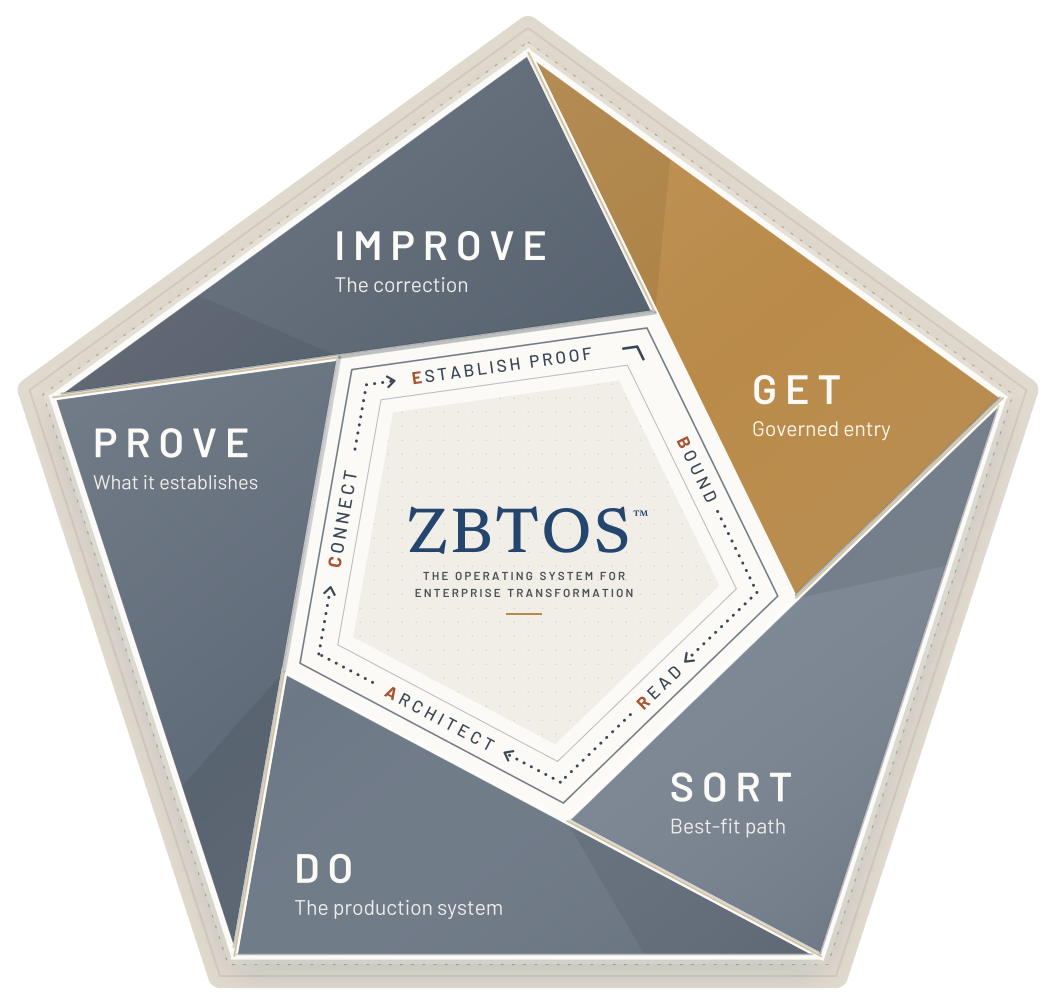
It does not replace the methods your teams already use. Project, agile, process and change methods execute defined work well. ZBTOS™ gives them a defined target and a standard of proof, and connects them to the five criteria.
See how the methods you already use fit together →Building the capability
Transformation capability is the ability to do this with your own people, on your own work, and keep it after any program ends. It can be inspected: who can see the operating model, make the requirements explicit, trace work to its origin, govern on evidence, test whether a requirement is ready, and defend the result to finance.
Get the full introduction.
Eighteen pages with the exhibits, a worked example, the evidence and its sources. Enter your work email and the download link appears.
Two short research questions sit with it; both are required. Answers are read only in aggregate, across many enterprises.
Bring one way of working to every team that carries your transformation.
The Foundation Course teaches the method to a cohort from across your enterprise, on one shared case, in two days.

Training, assessment and support for transformation capability.
Carrying an external mandate? ETEGY →