Operating Model
How the enterprise actually works: the flows of work that turn requests into value, and the way they are run.
Leaders are now asked to show how a strategy changes the way the business operates, not only what it funds. When the operating model stays the same, the results usually do too.Only 48% of digital initiatives meet or exceed their business outcome targets.Gartner, 2025 CIO and Technology Executive Survey, n = 3,186
What is an operating model?
Ask most people to describe how their company works and they will describe the structure: the divisions, the functions, the reporting lines. The structure matters, but it is not how the work gets done. Work gets done in flows that cross the structure: an order moves from sales to operations to finance; a hiring request moves from a manager to HR to IT.
The operating model is the collection of those flows and the way they are run. It is what a customer, an employee or a regulator actually experiences. It is also what a transformation has to change if results are going to change.
That is the layer ZBTOS teaches you to work on.
Two things often get the same name.
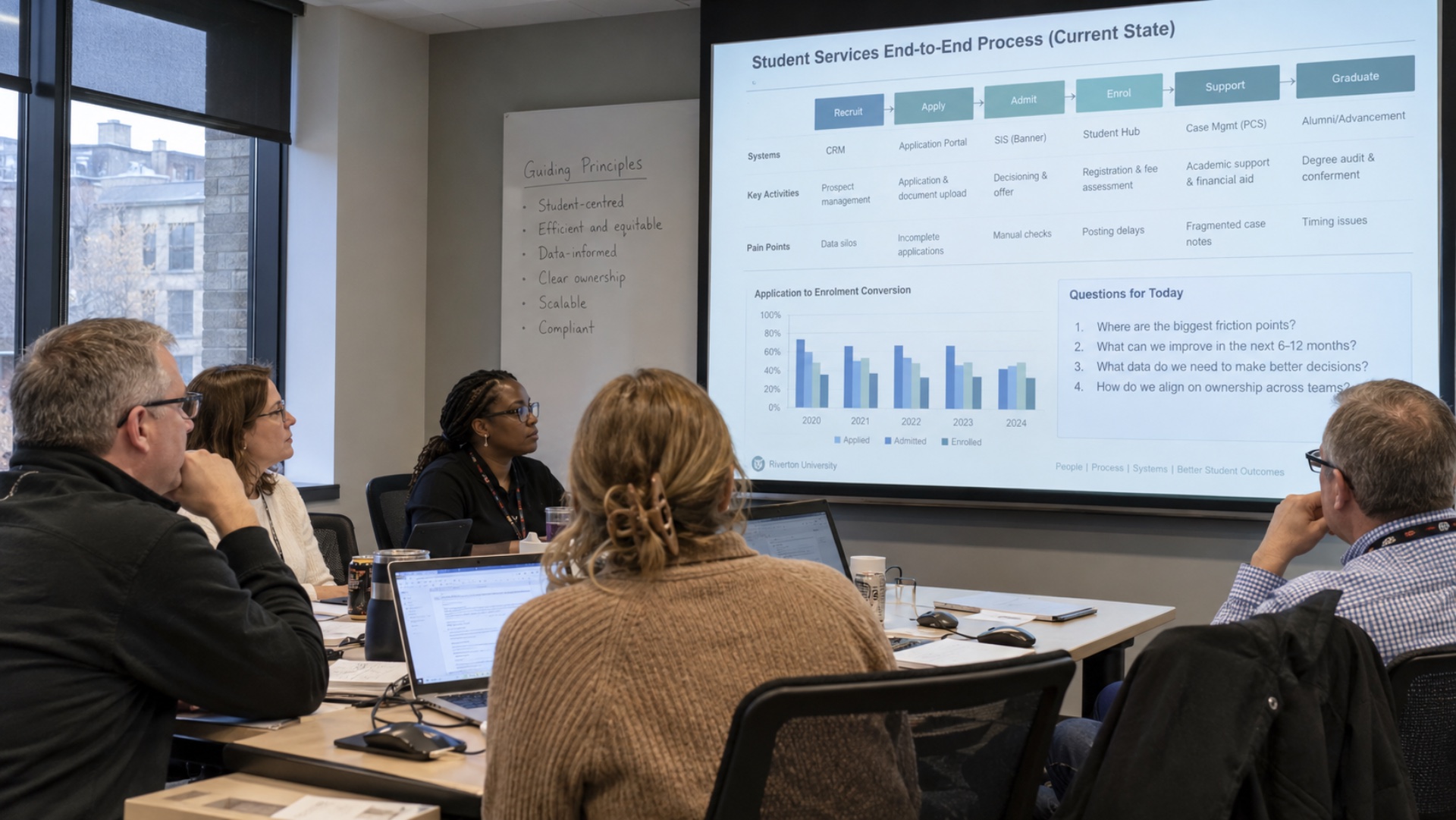
A transformation can be fully active, with every workstream green, and still leave the operating model unchanged. When that happens, the strategy was approved, the projects were delivered, and the business runs as before.
How ZBTOS reads an operating model
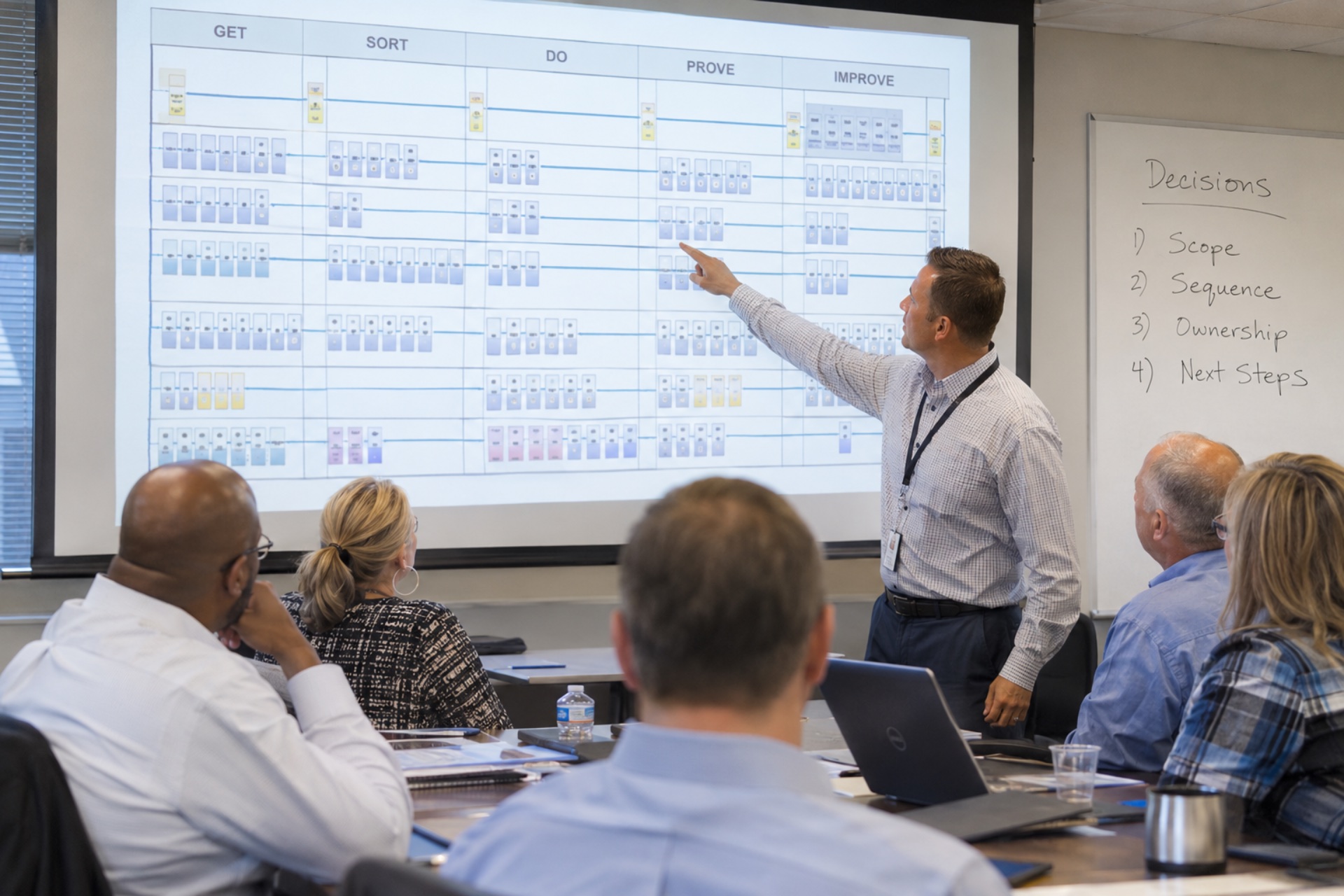
ZBTOS reads every flow in an operating model through the same five functions, called GSDPI™: Get. Sort. Do. Prove. Improve.® Each function is a standing part of every flow, present whether or not anyone is managing it.
Reading every flow the same way lets sponsors compare them, and lets practitioners see which functions no single team owns across the enterprise. How to read a flow, and how to read a function across many flows, is taught in the Foundation Course.
Learn it, then apply it to your own transformation.
An inbox, a spreadsheet and a standing meeting can be a routing function. Reading the operating model starts with what is actually running, not with the org chart.
Is an operating model the same as an org chart?
No. An org chart shows who reports to whom. The operating model is how work flows across those people and teams, from a request arriving to its value being proven.
How is it different from a target operating model?
A target operating model describes an intended future state, usually as structure, roles and capabilities. The operating model is what the work actually runs on today.
Where does ZBTOS teach this?
In the Foundation Course, where a cohort from across your enterprise reads the operating model of a shared case, and in the Practitioner Intensive, on one of your own live transformations.