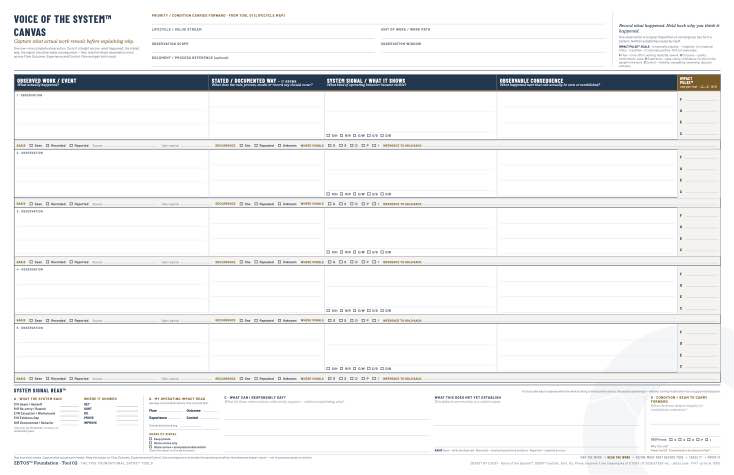
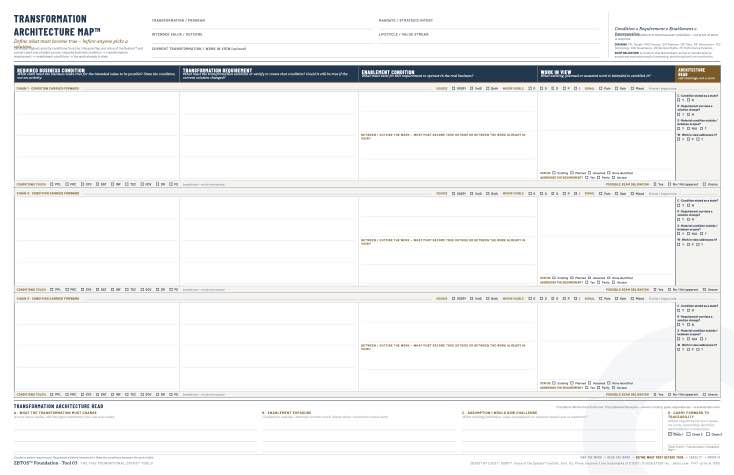
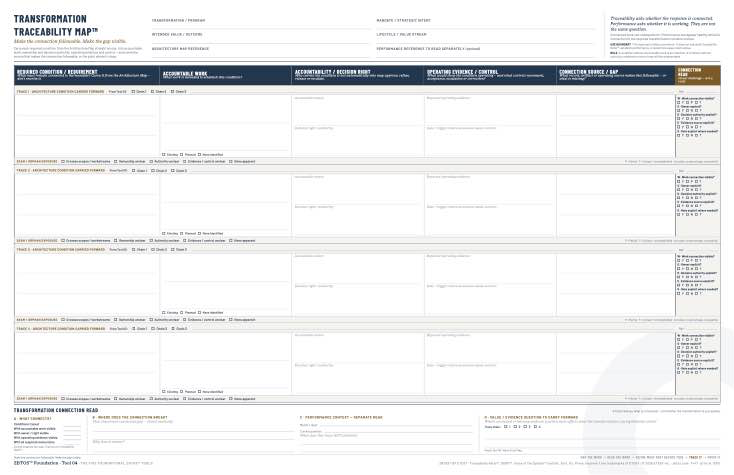
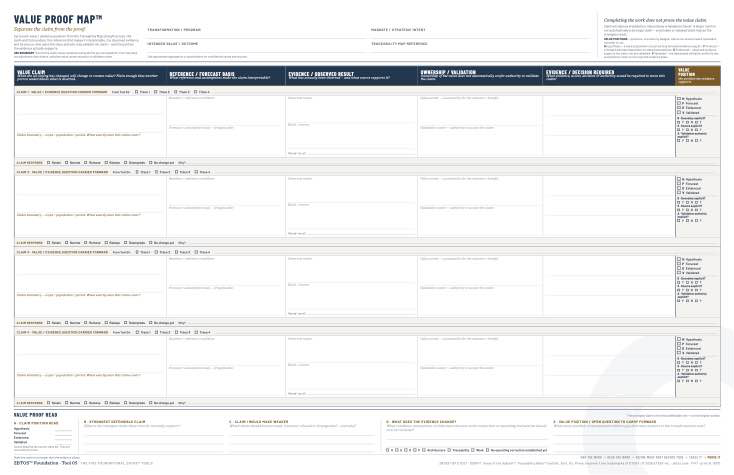
Foundation is a two-day private enterprise course taught on a standard worked case. Controlled-case learning — comparable across every cohort — not live-client diagnosis. Your people leave able to read work through GSDPI™, weight a finding, recognize a conversion break when they see one, and apply the method immediately.
A facilitated mapping exercise applying the frame to your own situation — without the course becoming about your situation.
A shared teaching case keeps the instruction coherent; application moments connect each tool to transformation work participants actually know — PMs, BAs, business architects, product, change and functional leaders each bring their own context. One common method, different transformations.
Roughly 40% of the time is exercises and breakouts, a third is teaching, and the rest is debrief and faculty challenge. It is a working course for senior practitioners — not executive education from the front of the room.
Mandate, intended value and the actual operating system — not the initiative list as given.
Populate the five functions against the case — how work is actually produced and the evidence it emits, phase by phase, boundary by boundary.
Different altitudes expose different operating conditions. Groups reconcile competing reads into one view.
Actual work, exceptions and workarounds as signals; how work crosses hands, state and meaning.
Mandate → conditions → requirements → enablement → work. Then owners, decision rights, evidence and gates.
Follow the response into work, authority, evidence and control; then Hypothesis → Forecast → Evidenced → Validated on real claims — and whether the system can see and correct itself.
Teams run the whole system from mandate to value proof — and defend the reasoning against faculty challenge.
Find the work-path frictions worth the conversation.
Rate what the system is telling you — on evidence, not opinion.
Challenge conditions, requirements and the seams between the work.
Follow every condition into work, authority, evidence and control.
Hold every claim to the strongest position the evidence allows.
And one discipline underneath all five: every observation carries its evidence basis — Seen, Recorded or Reported.
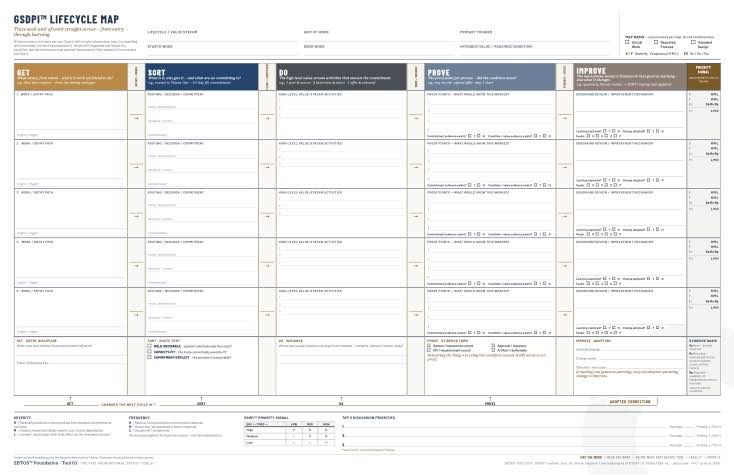
The Five Foundational Tools plus seven course-grade practice aids: the Method Map, Mandate & Transformation Frame, the 360° Read Guide, Seam & Handoff Inquiry, the Owner / Decision Right / Evidence / Gate Sheet, the Case Synthesis Canvas and a First-Read plan.
The Participant Guide carries the methodology; the Applied Workbook carries their own working. Every exercise they complete against the standard case goes home with them.
Certificate of Completion — ZBTOS™ Foundation. A course credential: it recognizes completed participation and exercise work, deliberately distinct from the Practitioner Intensive's applied standard.
Need to learn the operating system? Foundation gives your team the shared method, language and foundational tools — through guided application.
Need practitioners who can apply it independently, on the work your enterprise is actually carrying? The Practitioner Intensive assembles a cohort around one explicit transformation and moves from guided application to governed practice — deeper evidence requirements, the Enablement Blueprint, defensible value positioning and post-program verification. Foundation is not certification, and it does not diagnose your live work. That is deliberate — it is why the two products stack cleanly.
Nominate the practitioners who carry your transformations. Before Day 1, a 30-minute sponsor orientation covers what ZBTOS is, what the two days teach, and what your people will — and won't — leave able to claim. Afterward, ask them one question: what do you now see that you couldn't see before?
It is not process work with a bigger budget, and it is not value realization on its own. It is the discipline that sets what must change, governs whether the work converts, and proves the condition changed. That requires breadth across all of those — and the authority to bind them where they meet.
A delivery office. A PMO or EPMO governs scope, schedule and budget for work that is already defined. It is good at that, and it was never scoped to decide what the change has to be.
A process function. Process improvement raises performance inside the structure it is given. Transformation is the change to the structure itself.
The layer above both. It establishes required conditions, holds the conversion gates, sets the evidence standard, and reconciles what was promised against what happened.
This is why the seat matters, and why it so often sits in the wrong place.
A mandate that crosses decision rights no single function controls cannot be delivered from inside one of them. It is a scoping problem rather than a people problem — and it is the most common reason a competent leader cannot move a transformation.
Read that condition →The practitioners who most need this are already carrying the mandate. Every quarter they carry it without the method is a quarter of decisions made on inference.
One conversation scopes the delivery.