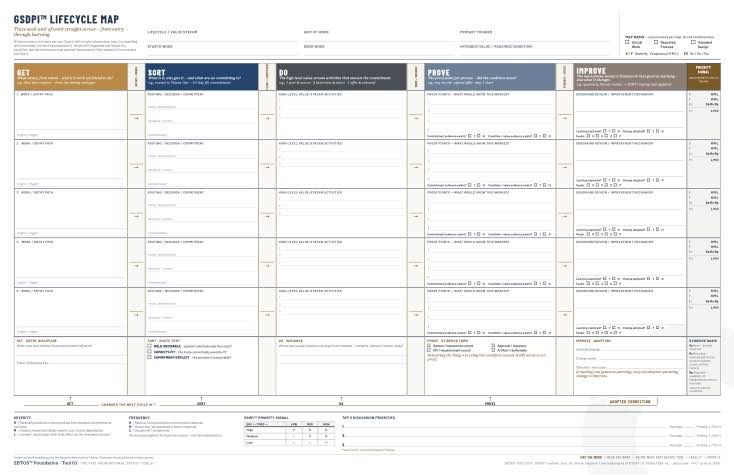
GSDPI™ Lifecycle Map
See how the work actually moves.
Map GET · SORT · DO · PROVE · IMPROVE and the boundaries where work changes hands, state or meaning.
On the sheet: trace real units of work straight across, rate only material friction, and mark every observation Seen, Recorded or Reported. What leaves the tool: your top priorities for the next one.
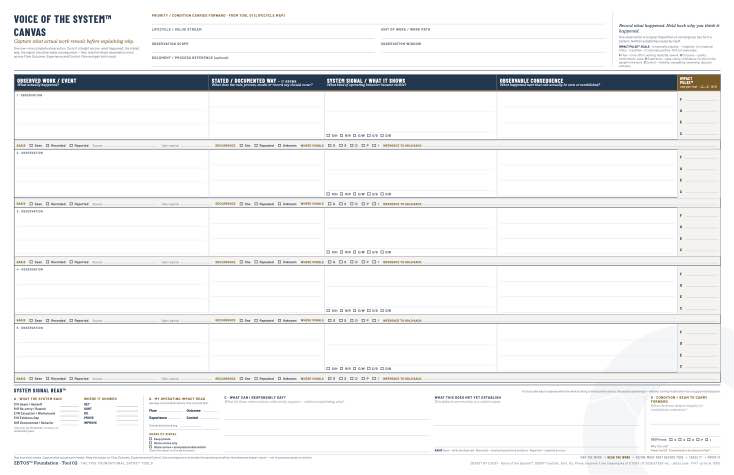
Voice of the System™ Canvas
See what the operating system is telling you.
Capture actual work, seams, handoffs, exceptions, workarounds and evidence gaps before deciding what they mean.
On the sheet: one complete observation per row — what happened, the stated way, the signal, the consequence — rated once across Flow, Outcome, Experience and Control. What leaves the tool: the condition that deserves deeper inquiry.
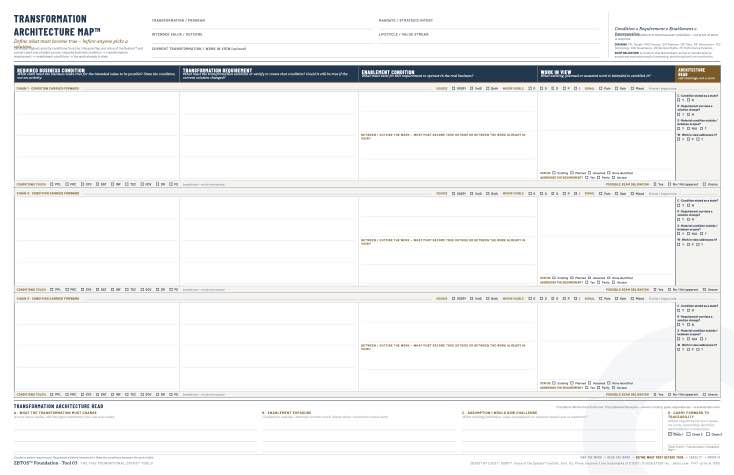
Transformation Architecture Map™
Connect strategy to what must become true.
Move from mandate and business conditions through transformation requirements, enablement conditions and work.
On the sheet: conditions stated as states, requirements that would survive a solution change, and the conditions that fall between the work. What leaves the tool: the chain most needing its connections tested.
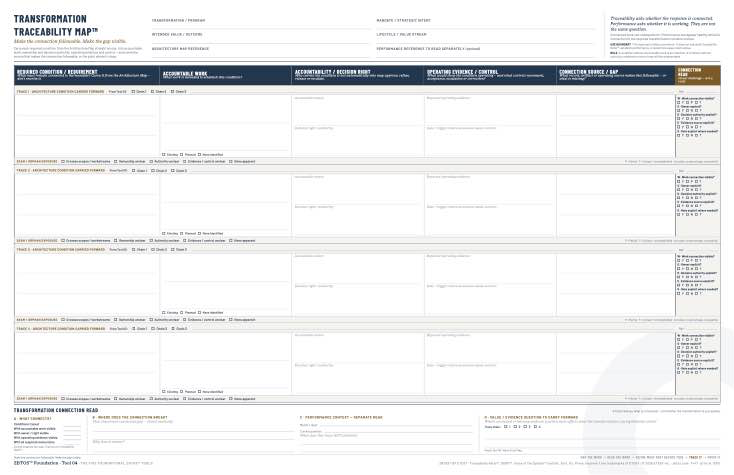
Transformation Traceability Map™
See what connects — and what doesn't.
Map the relationship between required operating conditions, accountable work and the evidence intended to demonstrate them.
On the sheet: owner and decision authority answered separately, evidence with a named source, and “none identified” recorded as a result. What leaves the tool: the value question that most affects what you can claim.
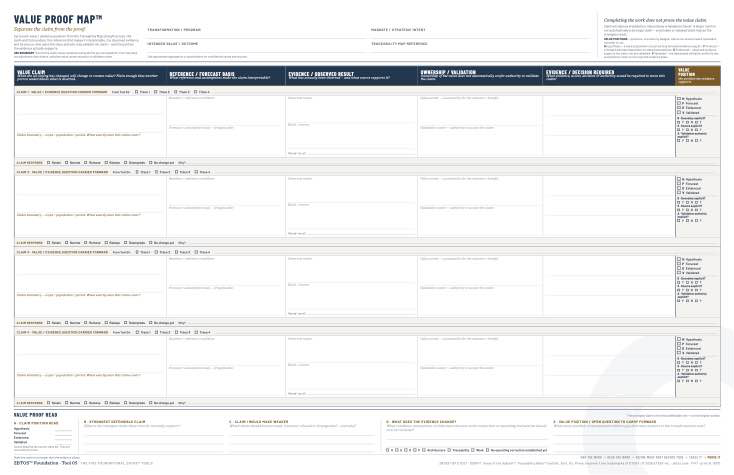
Value Proof Map™
Separate the claim from the proof.
Place value claims against hypothesis, forecast, evidence and validation — and identify what would be required to move the position.
On the sheet: every claim gets its boundary, reference, evidence source, value owner and validation owner — and no position stronger than the evidence allows. Positions move in both directions.